The easiest Chinese-style takeaway that you can make in your own home. It's cheaper and tastier too!
Wednesday, 7 October 2020
Sticky Pork Ribs
Monday, 28 September 2020
Turkey, Lentil and Orange Soup with Chive and Mustard Dumplings
Feeds 6
1 turkey leg, split into a thigh and drumstick
3 tbsp olive or rapeseed oil
6 rashers of smoked streaky bacon
1 onion, chopped
3 carrots, peeled and diced
3 celery sticks, diced
A few thyme stalks, stripped of their leaves
2 cloves of garlic, sliced
1 tin of tomatoes
Zest and juice of 1 orange
500ml water
100g brown lentils
Salt and pepper
For the dumplings
150g self raising flour
75g butter or low fat spread
A handful of fresh chives, chopped
1 tbsp English mustard
Salt and pepper
1 - Pre-heat the oven to 160C/Fan 140C/GM3.
2 - Heat the oil in a large casserole dish. Quickly brown the turkey leg all over then remove and keep aside.
3 - Add the bacon, onion, celery and carrot and cook for 10 minutes until beginning to colour.
4 - Stir in the thyme and garlic. Cook for a further minute then add the tomatoes. Return the turkey leg to the casserole and then pour in enough water to barely cover the leg. Stir, bring to the boil then place in the oven for 1 hour.
5 - Take out of the oven and stir in the lentils. Return to the oven and cook for a further 45 minutes.
6 - Remove from the oven and take out the turkey leg. Strip it of the meat and put this back into the casserole dish and stir through along with the orange zest and juice. Taste for seasoning.
7 - To make the dumplings, rub together the butter and flour. Stir in the remaining ingredients along with a little water to form a soft dough. Roll into balls the size of golf balls and place onto the top of the soup. Put the lid on and place back into the oven for a further 15-20 minutes until the dumplings are puffed up and cooked through.
Thursday, 24 September 2020
Beef and Root Vegetable Stew with Herb and Mustard Dumplings
When it comes to comforting food, this is the season to eat: hot stews and casseroles; filling sticky puddings and hot custard; steaming oat porridge with syrup. These are the foods of the Gods and I champion every single one of them.
The slow cooker comes into its own during these frugal and busy times and it sits there begging for yet another meaty stew to help fill the house with mouth-watering smells to come home to each evening. Some decent chunks of braising beef, lots of root vegetables, woody herbs and a slosh of red wine and stock are all that is required to make a heavenly stew. And if you can top it with some dumplings, an invention born to stick to your insides and fill the most rumbling of tummies, you can guarantee smiles on faces all round. Enjoy the seasons.
Beef and Root Vegetable Stew with Herb and Mustard Dumplings
Feeds 4
2 tbsp vegetable or sunflower oil
800g braising beef cut into large chunks
1 onion, roughly chopped
1 handful of roughly chopped thyme or 1 tbsp dried thyme
2 tbsp tomato puree
2 heaped tbsp seasoned plain flour
250ml red wine
250ml beef stock
4 carrots, peeled and sliced into thick chunks
2 leeks, sliced into large chunks
1 small swede, peeled and cut into chunks
For the dumplings
200g self-raising flour
100g margarine or butter
1 tbsp English mustard
4 tbsp chopped chives, thyme and parsley
Salt and pepper
Water
1 - Pre-heat the slow cooker or the oven to 160C/Fan 140C/GM4.
2 - In a large pan or casserole dish, heat up the oil. Add the beef and fry quickly to seal all over. Remove with a slotted spoon.
3 - Add the onion and cook for a further 5 minutes. Return the beef and stir in the herbs and tomato puree. Sprinkle in the flour and stir for 1 minute.
4 - Add the wine bring to the boil, stirring all of the time to get rid of any lumps. Cook this out or a minute then stir in the stock. Add the vegetables then either pour into the slow cooker or place the casserole dish into the oven.
5 - If cooking in the slow cooker, cook on a low setting for 5-6 hours. If cooking in the oven, cook for 2 to 2.5 hours, checking every hour to see if the liquid is sufficient.
6 - To make the dumplings, rub the flour and margarine together then stir in the mustard, herbs and a little salt and pepper. Pour in enough water so that when mixed with hands you have a soft sticky dough. With floured hands or two tablespoons, form walnut sized balls and put aside.
7 - For the final 45 minutes cooking time, place the dumplings on top of the stew and cook until plump and cooked through.
8 - Taste for seasoning. Serve with seasonal greens.
Friday, 11 September 2020
Meatball Marinara
An unnamed high street food provider has a version of this on their menu. Meatball marinara: hot meatballs, tomato sauce and cheese stuffed into bread. Sounds messy and delicious yeah? Well, it is!
Here's a homemade version which was actually made from the leftover pasta and meatball dish I made the night before. Waste not want not! So you can use this exact recipe for a plate of pasta and meatballs if this doesn't take your fancy.
I've served this on a piece of thick sourdough which is robust enough to soak up the juices without falling apart, but any old bread will do if lightly toasted.
Meatball Marinara
Ingredients - feeds 4
For the tomato sauce
2 tbsp olive oil
1 onion, finely chopped
2 cloves garlic, sliced
400g tin of tomatoes
1 tbsp Balsamic vinegar
1 tbsp dried oregano
A pinch of ground chilli
Salt and pepper
For the meatballs (to make 20-25)
500g good quality minced beef
2 cloves garlic, crushed
A handful of fresh basil, finely chopped
The zest of half a lemon
Salt and pepper
1 tbsp olive oil
Fresh spinach (optional)
4 thick slices of bread, lightly toasted
Grated Cheddar cheese
1 - To make the tomato sauce, heat up the oil in a pan. Add the onion and cook on a low heat for 10 minutes until softened. Add the garlic, cook for a further minute. Then add the tomatoes, Balsamic vinegar, oregano and chilli. Stir, bring to the boil then lower the heat and simmer for half an hour with the lid slightly off.
2 - When cooked and reduced, taste for seasoning then using a hand blender, blend to your desired consistency. Keep aside.
3 - For the meatballs, put all of the ingredients into a mixing bowl and using your hands, combine thoroughly. Using damp hands, form meatballs the size of a golf ball and put aside onto a seperate plate.
4 - In a large non-stick pan, heat up the oil. Add the meatballs and cook on a medium heat all over, stirring regularly until golden brown.
5 - Pour in the tomato sauce, cover and simmer on a low heat for 15 minutes.
6 - Heat up your grill to a high setting. Cover a grill tray with foil and place on your toasted bread. Put a layer of optional spinach onto the bread then using tongs, place 4-5 meatballs onto each slice. Pour on the tomato sauce, top with a handful of Cheddar cheese and then grill until golden and bubbling.
Monday, 5 June 2017
Slow roast paper wrapped leg of lamb
Feeds 4-6
2-3kg leg of lamb
1 sprig of rosemary
3 cloves garlic
Juice of 1 lemon
4 tbsp olive oil
Salt and pepper
1 - Pre-heat the oven to 150C/GM3. With a sharp knife, skewer the leg all over to form small holes.
2 - Put the rosemary leaves and garlic into a pestle and mortar with a good pinch of salt. Bash it about to break up the leaves then squeeze in the lemon juice and stir together with the olive oil and a good grinding of pepper.
3 - In a baking tray, lay over a large piece of baking paper. Cross it over with another piece the same length. Put the halved and squeezed lemon pieces onto the paper then place on the lamb leg. Pour over the marinade then rub in thoroughly all over.
4 - Wrap around the paper before wrapping around another large piece to ensure that it is thoroughly wrapped. Tie roughly with string then leave to marinade for an hour or so.
5 - Place into the oven and cook for 3 hours. Once cooked, remove and allow to rest in the paper for 30 minutes. Remove the paper, carve and serve with your choice of vegetables, spooning over the delicious juices. Or to make a more substantial gravy, place the roasting tray over a hob, pour in a glass of red wine and bring to the boil before stirring in a nob of butter.
Tuesday, 9 May 2017
Cod and Lentil Masala
The most important aspect to me as a food lover and cook is to ensure that the food never lacks in flavour. So far so good, especially with this flavour packed curry; a myriad of flavours from sweet tomato, nutty cumin and the aniseed of fennel seed which pairs so well with fish.I've used chunky cod in this curry (or masala, which basically means a mixture of spices). Cod holds its shape well but any firm fish will do. Look for ling, pollack, whiting or even salmon and trout. Enjoy, health and food lovers.
Cod and Lentil Masala
Serves 4
1 red onion
A thumb size piece of ginger
5 garlic cloves
1 tbsp groundnut or vegetable oil
1 tsp each of fennel seeds, ground cumin, ground coriander, chilli powder, turmeric, garam masala
1 tbsp tomato purée
500g tomato pasata
100g brown lentils, cooked
300g cod, cut into large chunks
Salt and pepper to taste
1 - Either finely chop the onion, garlic and ginger or blitz in a food processor to form a paste.
2 - Heat up the oil in a non stick pan and add the paste. Cook, stirring, until it begins to caramelise.
3 - Add the spices and cook for 2 minutes. Add the tomato purée and cook for 1 minute. Finally, add the pasata and bring to the boil. Simmer for 10 minutes until reduced and thickened.
4 - Add the fish and lentils. Simmer for 5-10 minutes or until the fish is cooked through. Taste for seasoning, you may want more chilli. It should be sweet, spicy and aromatic.
Tuesday, 25 April 2017
Turkey Kofta with Greek Cous Cous Salad
Kofta, in it's more simple turn, is a type of meatball combined with spices and usually served with flatbreads, yoghurt-based dips and salad and consist of any ground meat. These use turkey but feel free to use your meat of choice.
Utterly delicious, family friendly food that is so easy to make - what is there to not like about the food of this nation? Give it a go.
Turkey Kofta with Greek Cous Cous Salad
Feeds 4
500g minced turkey
3 spring onions, finely chopped
2 garlic cloves, crushed
1 tsp each of ground cumin, coriander and paprika
A pinch of ground cinnamon and chilli
A handful of fresh chives, basil, mint and oregano or one or two of these fresh herbs if and when available
For the salad
200g dried cous cous
1 red pepper, sliced
Cherry tomatoes, halved
A handful of fresh spinach, chopped
A few good black olives
Juice of 1 lemon
2 tbsp olive oil
Salt and pepper
Fresh basil
1 - To make the koftas, combine all of the ingredients thoroughly in a large mixing bowl. Form palm sized balls then roll into a slightly elongated shape like in the diagram. You can slide these onto sticks and BBQ or in my case, simply form the shapes. They should make around 10-12. Put aside to rest in the fridge for an hour or two.
2 - To make the cous cous, pour into a large bowl then stir in boiling water that just covers. Cover with clingfilm and leave for 10 minutes.
3 - Remove the clingfilm then fluff up with a fork. Once cool, stir in all of the ingredients until thoroughly combined. Taste for seasoning.
4 - Heat up a large frying pan, griddle pan or grill and cook the kofta, turning regularly until cooked through and golden brown. Squeeze in some lemon juice just as they are finishing to deglaze the pan and add more flavour.
5 - Serve the cous cous in bowls with 2-3 kofta each, a scattering of torn fresh basil and some fresh lemon.
Tuesday, 4 April 2017
Slow Cooker Asian Pork and Aubergine
Use a cheap cut of pork such as the shoulder or steaks from the leg and the meat will just fall apart at the touch of the fork. The aubergine, vast in number at the start of the stew, absorbs and melts into the sauce making it rich and velvety.
I can't really sell it enough - just make it and enjoy it with plain rice and perhaps a baked sweet potato. It will be a good decision.
(This recipe is for a slow cooker but can be replicated for cooking in an oven set to GM2/150C.)
Sunflower or vegetable oil
1kg pork shoulder, cut into large chunks
2 aubergines, cut into chunks
1 tbsp demerera sugar
2 star anise
1 cinnamon stick
1 tbsp tamarind paste mixed with a little hot water
1 large onion, chopped
A large pinch of dried chilli flakes
1 thumb size of fresh ginger, peeled and grated
2 tbsp fish or soy sauce
Water
Fresh limes
Fresh coriander
1 - Pre-heat your slow cooker.
2 - Heat up a tbsp oil in a large non-stick frying pan. Add the pork and quickly brown all over. Remove to a plate.
3 - Add the aubergine and quickly brown all over. Return the pork and stir in the sugar. Cook, stirring all of the time, to caramelise the sugar. Tip into your slow cooker.
4 - Heat up another tbsp oil and add the onions, ginger, chilli, star anise and cinnamon. Cook until softened then add to the pork and aubergine.
5 - Pour in 200ml water, the tamarind and the fish sauce. Cook on the medium setting for 5-6 hours until the pork is meltingly tender. Stir in a handful of chopped fresh coriander.
6 - Time to tweek with the flavours. Squeeze in the juice of one lime and taste. You want the right balance of salty, sweet, hot and sour. Adjust the quantities of fish/soy sauce, sugar, chilli and lime to your tastes.
7 - Serve with plain boiled rice, fresh coriander and wedges of fresh lime.
Thursday, 30 March 2017
Moroccan Beef Cous Cous
Feeds 4
1 tbsp olive oil
500g lean beef mince
1 onion, finely chopped
1 carrot, peeled and diced
1 red pepper, diced
100g green beans cut into small pieces
1 tsp each of ground cumin, paprika, coriander
1 clove of garlic, chopped
A pinch of chilli powder
1 tbsp tomato puree
1 beef stock cube
1 tbsp honey
250ml water
200g cous cous
A couple of handfuls of fresh spinach, chopped
Cherry tomatoes, halved
A handful of fresh coriander, chopped
1 fresh lemon
Salt and pepper
1 - Put the cous cous into a bowl. Pour over boiling water until just covered. Cover with clingfilm and leave for 10 minutes.
2 - In a wok or large frying pan, heat up the oil. Add the mince and brown. Add the onion, carrot, pepper and green beans. Cook for 10 minutes until beginning to soften.
2 - Add the spices and garlic and cook for a couple of minutes, stirring.
3 - Add the tomato puree, crumbled stock cube, honey and the water. Bring to the simmer, cover and cook gently for 15 minutes.
4 - Taste for seasoning. Fluff up the cous cous with a form then stir into the meat mixture with the spinach, cherry tomatoes and fresh coriander. Squeeze in half of the lemon and cut the other half into wedges.
5 - Serve with the lemon and some more fresh coriander scattered over.
Tuesday, 21 March 2017
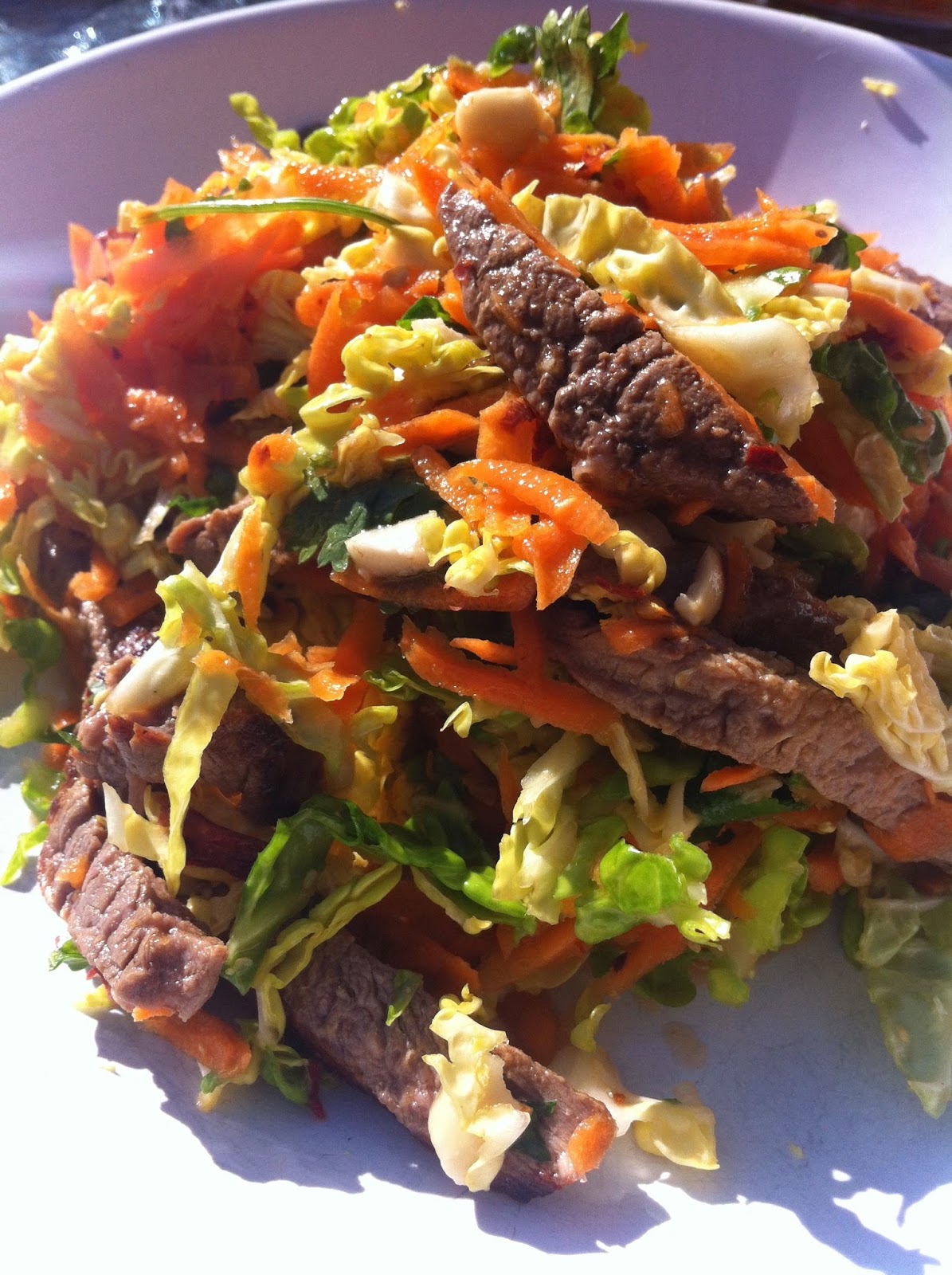
Asian Beef, Savoy and Peanut Salad
1 Savoy cabbage
4 carrots, grated
A handful of fresh coriander
Salt and pepper
2 sirloin steaks
For the dressing
1 crushed clove of garlic
Juice of 2 limes
1 tbsp fish sauce
1 tsp honey
A handful of peanuts
Monday, 13 March 2017
Spring Lamb with Thyme, Lemon and Garlic

Last night it was back down to earth with the remnants of the week’s leftover vegetables and our favourite, 'bubble and squeak'. A few spring lamb chops left to soak in thyme, garlic and lemon are the perfect lip smacking accompaniment. It has everything that easy, no fuss cooking should have and the key to making the most of a simple yet special thing.
Spring Lamb with Thyme, Lemon and Garlic
Feeds 3
6 lamb loin chops
For the marinade
2 cloves of garlic
10 sprigs of thyme, leaves stripped
Juice of 1 lemon
2 tbsp olive oil
Salt and pepper
For the 'bubble and squeak'
Any leftover vegetables such as potatoes, carrots and cabbage.
Salt and pepper
1 - To make the marinade, crush the garlic and thyme in a pestle and mortar or a food processor with a good grinding of salt and pepper until you have a green sludge. Mix in the lemon juice and olive oil.
2 - Put the chops into a bowl and pour over the marinade. Rub in and leave to sit for at least 1 hour.
3 - Heat up a frying pan until smoking, or heat up a grill to its highest setting. Cook the lamb chops without moving for 2 minutes each side until char-grilled but still pink inside. Leave to rest for 2 minutes.
4 - To make the bubble and squeak, simply mash all of your leftovers together with seasoning and form into little 'cakes'. Pan fry until crisp and golden.
4 - Serve with bubble and squeak or boiled potatoes and a simple salad, ensuring that you drizzle over the pan juices.
Thursday, 23 February 2017
Low Fat Chicken Tikka Masala
My family tend to keep away from takeaways and make our own. They really can be simple to make and in this case, are often more healthy as you are in control of the salt and fat content.
Rather than cream, this uses yoghurt but aside from that, it is absolutely packed with flavour and misses none of the extra fat. For the spices you can use one of those ready-mixed tikka spices but it's just as easy to do it from scratch. Give your taste buds and your stomach a favour and try it now!
Low Fat Chicken Tikka Masala
Feeds 4
Ingredients
Marinade
4 chicken breasts, sliced into mouth sized chunks
100ml low fat yoghurt
Juice of 1 lime
1 tsp each of ground paprika, ground coriander, ground ginger, turmeric, ground cumin and fennel seeds (grind them in a pestle and mortar if you prefer)
Salt and pepper
1 tbsp vegetable oil
1 onion
6 cloves of garlic
A thumb sized piece of fresh ginger
1 fresh red chilli
1 tsp of garam masala, ground coriander and ground cumin
Half tsp of ground cinnamon
5 tbsp tomato puree
150ml low fat yoghurt
Salt and pepper
1 - In a large bowl, mix together the yoghurt, lime juice, spices and seasoning then marinade the chicken in it for a few hours.
2 - Finely chop the onion, garlic, chilli and ginger (or blitz in a food processor). Heat up the oil in pan and add. Cook for 10 minutes until starting to colour. Add the spices and cook for 1 minute.
3 - Stir in the tomato puree followed by the yoghurt. Simmer for 10-15 minutes until slightly reduced. If it looks too dry, add a splash of water. Taste for seasoning.
4 - While that is cooking, place your marinaded chicken on a piece of tin foil and cook under a hot grill until cooked and slightly charred.
5 - Stir into the curry sauce and taste for seasoning. Serve with rice, a scattering of fresh coriander and wedges of lime.
Thursday, 2 February 2017
Tomatoless Beef and Squash Curry
I've a great recipe which uses yoghurt as the main base for the sauce, a twist on a Rogan Josh, but even that uses tomato paste to colour and flavour. Thinking along the same lines, the curry I ended up with uses a rich paste of onion, garlic, chilli and ginger, lots of Indian spice and tamarind pulp, a sweet and sour fruit available in good Asian stores and one heavily used in Keralan food in south India.
The verdict? For something so simple and easy to make, it was delicious; hot, pungent, spicy and slightly sweet, the tomato wasn't missed one bit and it completely took me by surprise, becoming one of the best curries I've ever made. Try it this weekend; it will put smiles on faces, even ones with certain food allergies.
Tomatoless Beef and Squash Curry
Feeds 4
2 onions, peeled
1 thumb size of ginger, peeled
6 cloves garlic, peeled
1 red chilli, deseeded
2 tbsp vegetable oil
1 tbsp garam masala
1 tsp turmeric
2 bay leaves
600g stewing beef cut into large chunks
1 small butternut squash, peeled, seeded and sliced thin
200ml tamarind water (use concentrated tamarind paste)
Water
Salt and pepper
1 - Pre-heat the oven to 160C/GM3. Put the onions, ginger, garlic and chilli into a blender. Blend to a paste.
2 - Heat up the oil in a flame-proof casserole dish. Add the paste and cook for 5-10 minutes until it begins to colour. Stir in the spices and cook for a further minute.
3 - Stir in the beef and thoroughly combine with the spiced paste. Cook for 5 minutes until the beef browns.
4 - Add the tamarind water and a little more water to just cover. Bring to the boil then place into the oven and cook for 2 hours. Check on the hour to ensure it isn't cooking dry; you may need to add a drop or two of water. Add the squash at this point too. The finished product should have a light gravy rather than be watery. Continue to cook if it is too watery.
4 - Remove the bay leaves and taste for seasoning. Serve with plain boiled basmati rice, chutney, fresh mint and/or coriander and Indian breads.
Monday, 23 January 2017
Toad in the Hole
If I had to guess, I would suggest that the image of a sausage poking its head out of crisped batter probably resembles a toad sticking its head out of a hole. After a few beers that is. Like I say, who cares? It is delicious, warming and comforting and that is what's important here.
Toad in the hole is a recipe I want to see in more restaurants at this time of the year, alongside shepherds' pie, steak and kidney pudding and chicken and leek pie. I've no ideas why more chefs are reluctant to put such fabulous food on their menus but it probably comes down to the image. Comforting British food such as these dishes seems so appropriate during the colder months and of course we make the best comfort food in the world, don't we?
This is a simple family favourite that is ace for those cold midweek nights when the soul and tummy need cheering up. Serve with mash, greens and lots of onion gravy.
Toad in the Hole
Feeds 4
250g plain flour
A pinch of salt and pepper
3 eggs, beaten
500ml milk
3 tbsp sunflower oil
500g quality sausages
1 - Pre-heat the oven to 220C/GM7.
2 - Put the oil into a roasting tin and place into the oven. When the oil is hot, add the sausages and bake for 5 minutes, turning every now and again until beginning to brown.
3 - Put the flour, salt and pepper into a large bowl. Make a well and add the beaten eggs. Begin to whisk in the milk until the batter has the consistency of double cream.
4 - Remove the roasting tin from the oven then pour the batter in and over the sausages. Place back onto a high shelf and bake for 30-40 minutes until the batter is risen, golden and crunchy.
Tuesday, 17 January 2017
The Perfect Dumpling
Once people - and that includes my own kids - understand what it is that's invading their soup or stew, it's all down to the eating and once you've sunk your spoon or knife into one, things make lots of sense.
Dumplings of course are nothing new and the Asians have been mastering silky smooth dumplings for a lot longer than we have. Whereas the Asian dumpling is a thing of beauty, a smooth and perfectly formed mouthful, the northern dumpling is it's big cousin. And I prefer that version. Experiment with the basic recipe by adding a good grating of strong cheddar cheese, mustard powder and herbs such as fresh thyme.
They aren't difficult to make but when I posted this photo on Instagram recently, some people commented on how they have tried and failed to make the perfect dumpling. So here you go, the failsafe formula that I've been using for years.
Dumplings (for stews, casseroles or soups)
Makes about 6 large dumplings
300g self-raising flour
150g butter, margarine or suet
Salt and pepper
Water
1 - In a large bowl, tip in the flour and a grating of salt and pepper.
2 - Add the butter, margarine or suet. If the latter, just mix in with a spoon but if it's the former, mix together with your fingertips to form large breadcrumbs.
3 - Add 2-3 tablespoons of water and mix together. Keep adding tablespoons of water until it just comes together to form a dough, not too sticky, not too dry.
4 - Half an hour before your stew or soup is ready, add large tablespoons of the dough. If you are cooking on the hob, put on the lid and cook for 25-30 minutes. If in the oven, you have the option of keeping the lid off to form crispy dumplings. Perfect.
Tuesday, 31 May 2016
Chicken, Apricot and Spinach Curry
Feeds 4
Ingredients
Seeds of 2 cardamon pods
5 whole peppercorns
5 cloves
3 tbsp sunflower or vegetable oil
1 onion, chopped
1 thumb of fresh ginger, grated
3 garlic cloves, crushed
1 tsp each of ground cumin, ground coriander, chilli powder and garam masala
400g chopped tomatoes
4 chicken breasts, sliced
2 tbsp brown sugar
4 tbsp white wine vinegar
2 handfuls of soft, dried apricots
100ml water
1 large bag of spinach
Fresh coriander
Salt and pepper
1 - In a frying pan, toast the seeds of 2 cardamom pods, 5 peppercorns and 5 cloves. Remove then crush with a pestle and mortar.
2 - Heat up the oil and fry the spices for 30 seconds. Add the chopped onion and cook until golden, then add a thumb of grated fresh ginger and 3 crushed garlic cloves.
3 - Stir in one tsp each of ground cumin, ground coriander, chilli powder and garam masala. Cook for a minute then add a tin of chopped tomatoes. Bring to the simmer.
4 - Add 4 sliced chicken breasts. Stir in 2 tbsp brown sugar, 4 tbsp white wine or cider vinegar and a couple of handfuls of chopped soft dried apricots. Pour in 100ml water. Bring to the boil then simmer gently for 30 minutes with a lid half on.
5 - Whilst the curry is cooking, put a large bag of spinach into a colander and pour over a kettle of boiling water to wilt the spinach. Allow to cool then squeeze out the water and roughly chop. Put aside.
6 - Taste the curry for seasoning, stir in the spinach and serve with boiled rice and fresh coriander.
Thursday, 5 May 2016
Tandoori Turkey Sticks with Mint Raita
1 tsp each of ground cumin, ground turmeric, ground coriander and chilli powder
4 ground cardamom pods
Salt and pepper
200ml natural yoghurt
Juice of half a lemon
500g turkey breast cut into chunks
4 wooden skewers, soaked in water for a couple of hours, or metal skewers
For the Raita:
3 tbsp fresh mint, roughly chopped
Half a cucumber, peeled, deseeded and cut into chunks
200ml natural yoghurt
Salt and pepper
1 – Put the yoghurt into a bowl and stir in the spices along with a little seasoning and the lemon juice.
2 – Thread the turkey onto the skewers. Put the turkey skewers into a shallow dish and pour over the marinade, ensuring that it is covered. Leave to marinade for 2-3 hours or overnight in the fridge.
3 – To make the raita, mix everything together in a bowl with a little seasoning.
4 – BBQ the turkey skewers for 10 minutes, turning regularly, until golden and charred in places.
5 – Serve with chapattis or naan breads, plain or lemon rice and the raita.
Thursday, 14 April 2016
Peanut and Beef Curry
I've used the likes of ground almonds in an Indian curry to thicken it but I was a little sceptical about using peanuts. But the result was nothing short of fabulous.
It is so easy to make. Whiz the main ingredients up in a blender to make a paste, fry it is a little oil with a few spices, add tomatoes, water and your choice of meat or vegetable then let it cook out. Thick, sweet, hot and the unmistakable hit of roasted peanut. The use of peanut butter is of course completely unauthentic and optional, but a tablespoon of the stuff seems to make everything more smooth and creamy.
You can serve this with just plain old rice but why not do as the Africans do? Boil your rice then form balls the size of golf balls using spoons or asbestos hands. You can do the same with left over rice too. Make them whilst they are cold then steam for 5 minutes until piping hot right through.
Peanut and Beef Curry
Feeds 4
1 onion, peeled
2 piece of thumbsize ginger, peeled
6 garlic cloves, peeled
1 red pepper, deseeded
1 red chilli, seeded or deseeded depending on how hot you like it
2 tbsp peanut or sunflower oil
3 large handfuls of peanuts
1 tbsp coriander seeds
3 cloves
1 Cinnamon stick
A little nutmeg
750g braising beef, chopped into large chunks
1 tin of chopped tomatoes
1 tbsp tomato puree
300ml water
1 tbsp peanut butter (optional)
Salt and pepper
1 - Put the onion, ginger, garlic, pepper and chilli into a blender and blitz to a puree. Pre-heat the oven to 160C/GM3.
2 - In a large dry frying pan, add the peanuts, coriander seeds and cloves and put onto the hob. Cook through for 5 minutes until fragrant, watching carefully that they are not burning. Bash to a rough powder in a pestle and mortar or use a plastic bag and rolling pin.
3 - Heat the oil in a large pan. Add the paste and cook for 10 minutes, stirring all of the time until slightly coloured. Stir in the spices including the cinnamon stick and cook for a further 2 minutes.
4 - Add the beef and heat through for 2 minutes until covered in the spice mixture thoroughly.
5 - Add the tomato puree, tomatoes and water. Grate in a little nutmeg. Bring to the boil then transfer to a casserole dish. Place in the oven for 2 hours, checking on the hour that it isn't cooking dry.
6 - Once cooked, remove the cinnamon stick, stir through the optional peanut butter and taste for seasoning. Serve with rice balls and warm flatbreads.
Wednesday, 17 February 2016
Slow Cooked Lamb Ragu
If you live in the UK and think of Ragu, a certain commercial tomato based pasta sauce available everywhere probably comes to mind. Those marketing boys did well when they managed to register that name.Ragu is a classic Italian tomato based sauce which will be being made in every house in every town in Italy. And each town or household will boast there own method which will no doubt make their region's the best in the world.
There is nothing simpler than making your own pasta sauce and it is a whole lot tastier and cheaper than buying the commercial jars. An onion and garlic softened in olive oil, a cheap tin of tomatoes or a handful of fresh chopped tomatoes when the season is here, a pinch of oregano and a splash of red wine or balsamic vinegar is all you need. Take that basic concept and experiment to your heart's desire. That's what simple cooking should be all about.
If I'm not in a rush, I like to slowly cook lamb in a ragu with additional ingredients such as chilli, juniper, sun dried tomatoes and orange peel, the latter dispensing a subtle citrus to the sauce. It may not be authentic but neither is a certain bottled sauce we all know and buy in our droves. Do yourself a favour and attempt your own some time.
Slow Cooked Lamb Ragu
Feeds 4
1 onion, chopped
2 sticks of celery, diced
2 carrots, diced
2 cloves of garlic, sliced
2 tbsp olive oil
3 juniper berries, crushed
1 whole dried chilli or a pinch of chilli flakes
2 tbsp tomato purée
500g lamb shoulder, cubed
2 tins tomatoes
A handful of sun dried tomatoes, sliced
1 glass of white wine
1 tbsp dried oregano
2 bay leaves
A slice of pared orange peel
1 tbsp Balsamic vinegar
Salt and pepper
1 - Pre-heat the oven to 160C, GM3.
2 - Heat the olive oil in a flame-proof casserole dish, or make this in a large pan and add to the casserole dish later.
3 - Add the onion, carrot, celery and garlic and cook until softened to make a 'soffrito'. Stir in the juniper, chilli and tomato purée and cook for 1 minute.
4 - Add the lamb and quickly brown then add the remaining ingredients except the seasoning. Bring to the boil, cover and place in the oven for 2 hours.
5 - Check every 30 minutes to ensure it isn't cooking dry. If it is, stir in a glass of water.
6 - When cooked, remove the bay, whole chilli and orange peel. Taste for seasoning and serve with your choice of pasta and Parmesan cheese.
Wednesday, 29 April 2015
Easy Creamy Chicken and Pepper Curry
Feeds 4
4 chicken breasts, sliced into chunks
1 thumb of ginger, finely grated
3 cloves of garlic, finely chopped
1 tsp chilli powder
1 tsp cumin
1 tsp turmeric
Juice of a lemon
2 tbsp sunflower oil
Salt and pepper
1 red pepper, diced
1 onion, finely chopped
300ml creme fraiche
Fresh coriander
1 - Place the chicken, ginger, garlic, spices, half the juice of the lemon, sunflower oil, salt and pepper, onion and pepper into a mixing bowl. Mix together thoroughly and leave to marinade for 30 minutes to an hour.
2 - Heat up a large non-stick pan. Add the ingredients and cook, stirring, for about ten minutes.
3 - Turn down the heat and add the creme fraiche. Bring to the simmer and cook with a lid on for 10 minutes.
4 - Add the remaining juice of the lemon, chopped fresh coriander and taste for seasoning.
5 - Serve with basmati rice, breads and pickles.
Popular Posts
-
As the cold nights set in and we don ever thicker socks and silly winter hats, we turn our thoughts to sustaining food that fills stomachs a...
-
Here is my version of a true classic, which has a leek's mild onion flavour lifted somewhat with the addition of cheese, mustard and cr...
-
And so the gluten free challenge continues. This challenge entailed trying to make one of my favourite ever cakes without it having a dry, s...
-
Wild Mushroom and Thyme Soup with Black Bream Serves 4 1kg wild mushrooms, either single variety or mixed 4 tbsp olive or rapeseed oil ...
-
Beetroot are an acquired taste. Boiled to submission, they can retain all of the character of a Saturday night singing contest. However, ro...
-
A lovely parcel arrived for me last week; a whole box full of black and white puddings. It's a delivery I can safely say has never h...
-
This is a really simple and delicious curry that can either be done in a slow cooker or left in a low oven. Packed with flavour, it's ...
-
An early start today with a 6am rendezvous on South Shields pier with a spinning rod and a shiny spinner. Mackerel season is in full force a...
-
This is an incredibly simple slow cook stew that celebrates the great flavours of south east Asia: hot, sweet, salty and sour. Use a che...
-
It is a much used statement but I have to agree, breakfast is undoubtedly the most important meal of the day. I can't argue with my stom...
Wholemeal, Oat, Walnut and Seed Loaf
This is a simple, no-knead loaf that reminds you of the classic German rye breads such as pumpernickel. So quite a heavy texture with plenty...
-
Here is my version of a true classic, which has a leek's mild onion flavour lifted somewhat with the addition of cheese, mustard and cr...
-
As the cold nights set in and we don ever thicker socks and silly winter hats, we turn our thoughts to sustaining food that fills stomachs a...
-
Wild Mushroom and Thyme Soup with Black Bream Serves 4 1kg wild mushrooms, either single variety or mixed 4 tbsp olive or rapeseed oil ...